

The Role of Soft Play in Early Childhood Development
In the first years of life, play isn't just fun; it's how children learn about their bodies, their environment, and the world around them. From the moment a baby begins to roll, reach, and crawl, play becomes the foundation for physical, cognitive, and emotional growth. Among the many forms of play available to young children, soft play stands out as one of the most valuable tools for early childhood development.
According to Play Promotes Early Development from HeadStart.gov, play helps children build language, motor, and problem-solving skills while they explore their world and learn about their own bodies.
Unlike structured activities or rigid toys, soft play for kids supports learning in a way that feels natural, safe, and joyful. It allows children to move freely, explore confidently, and engage their imagination without unnecessary limits. Through climbing, stacking, crawling, and building, kids' soft play encourages independence while supporting essential developmental milestones.
But what is soft play for kids, and why has it become such an essential part of modern parenting and early learning environments? Let's explore how soft play supports healthy development from infancy through the toddler years, and why it deserves a place in every child's daily routine.
Soft Play Cubes: A Foundation for Safe, Active Play
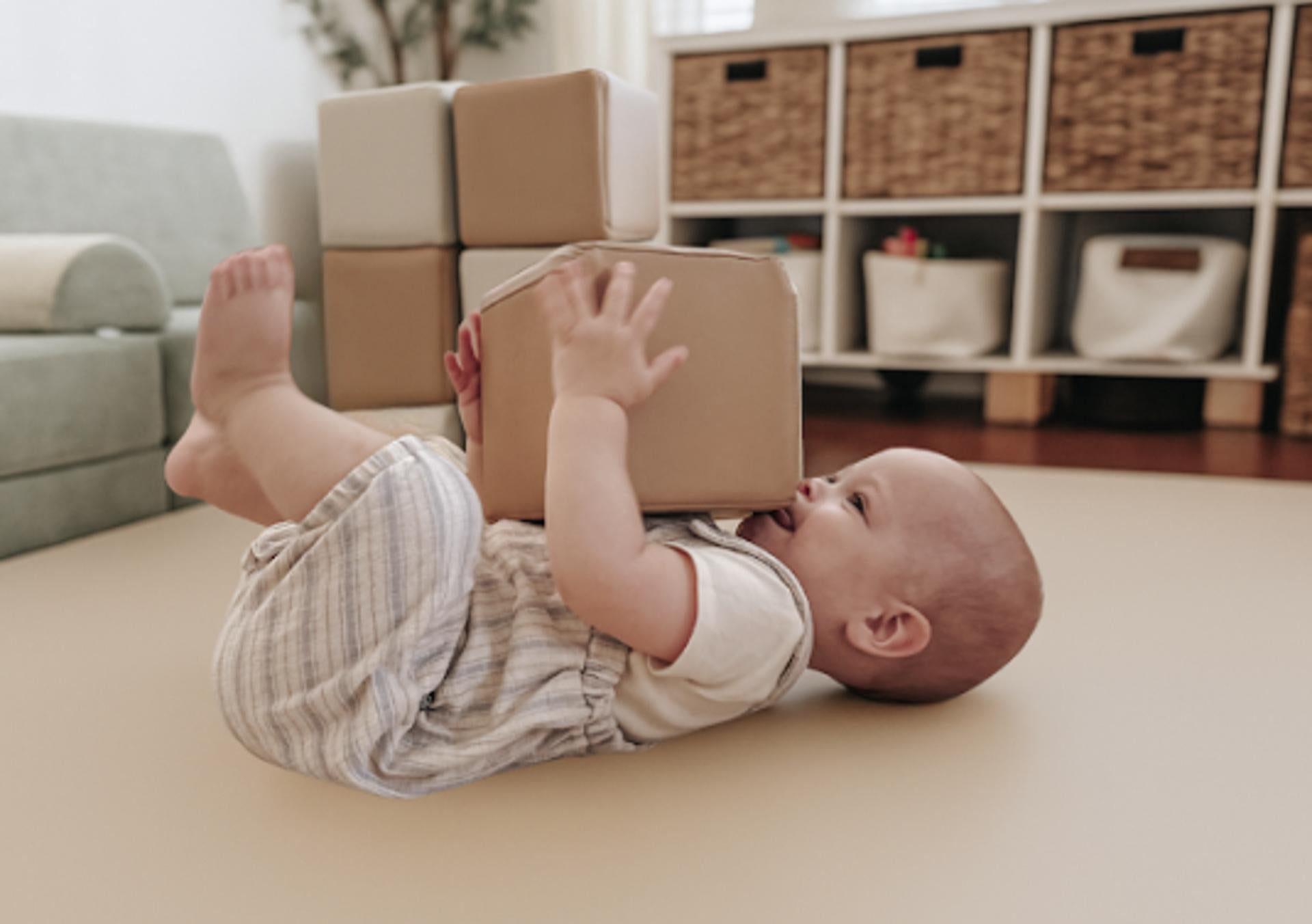
One of the most versatile and impactful elements in any soft play area for kids is a set of thoughtfully designed soft play cubes. These foundational pieces are often the first building blocks of kids' soft play, offering endless opportunities for movement, creativity, and exploration.
Wunderkids soft play cubes are crafted from high-density foam and finished with soft, wipeable covers, making them supportive yet gentle for growing bodies. Their lightweight design allows children to lift, stack, and rearrange pieces independently, encouraging confidence and imaginative play, while the clean, modern aesthetic blends seamlessly into contemporary homes.
Soft blocks allow children to climb, stack, crawl, and build in ways that support both physical and cognitive development. A simple stack becomes a balance challenge. A low climb becomes a confidence booster. Over time, these small moments add up to meaningful growth.
Through lifting, balancing, and rearranging kids' soft play blocks, children strengthen coordination, spatial awareness, and problem-solving skills, all essential building blocks in early childhood development.

What Is Soft Play for Kids?
Soft play refers to play equipment made from cushioned, padded materials designed specifically to be safe for babies and young children. Common examples include foam mats, kids soft play blocks, soft play cubes, tunnels, wedges, and low climbing shapes. These pieces are intentionally designed to reduce the risk of injury while encouraging movement, exploration, and imaginative play.
Unlike rigid toys or hard surfaces, a soft play area for kids allows children to crawl, roll, stack, climb, and tumble freely. This freedom is especially important during infancy and toddlerhood, when children are learning how their bodies move and interact with space.
A high-quality baby foam play mat provides the ideal foundation for tummy time, early movement, and sensory exploration from the very beginning. When paired with soft play structures, it creates a safe environment where children can practice new skills at their own pace.
Supporting Physical Development and Motor Skills
One of the most significant benefits of soft play is its impact on physical development. Babies and toddlers need daily opportunities to move safely in order to strengthen muscles, develop coordination, and build body awareness.
Crawling, rolling, stretching, and pulling up on soft surfaces supports balance and stability during key developmental milestones. Soft play for kids encourages repetition, and repetition is how motor skills are mastered.
As children grow, elements like soft play cubes introduce new challenges. Stacking requires control and precision. Climbing improves strength and balance. Pushing and pulling foam pieces builds coordination and spatial understanding. Because the materials are soft and forgiving, children feel confident experimenting with movement without fear of injury.
This sense of safety is critical. When children feel secure, they are more willing to try, fail, and try again, which is the essence of physical learning.
Encouraging Cognitive and Problem-Solving Skills
Soft play isn't just about movement; it also plays a vital role in cognitive development. When children interact with soft play for kids, they are constantly thinking, testing, and adapting.
How do I stack these blocks so they don't fall?
Can I crawl through this space?
What happens if I rearrange everything?
These questions spark problem-solving, memory, and early critical thinking skills. Open-ended play encourages children to explore cause and effect without instructions or pressure. According to ChildCare.gov, play-based learning helps children develop problem-solving skills, memory, and early reasoning by allowing them to explore ideas through hands-on experience rather than direct instruction.
Parents looking to enrich baby playtime and newborn activities can find valuable guidance in resources like your guide to baby playtime and newborn activities, which pair beautifully with soft play setups that evolve as children grow.
Fostering Creativity and Imaginative Play
One of the greatest strengths of kids' soft play is its ability to inspire creativity. Soft play pieces don't have a single function. Today, cubes might be stepping stones. Tomorrow, they're part of a castle, a mountain, or a cozy reading nook.
Using kids soft play blocks encourages imaginative play, self-expression, and storytelling. Children learn to create their own worlds, make decisions, and express ideas, all through play that feels effortless and fun.
For parents looking to keep play engaging, fun playtime ideas can help transform simple soft play setups into meaningful daily experiences that grow with your child.
Creating a Safe and Stimulating Play Environment
A thoughtfully designed soft play area for kids gives children the freedom to explore while offering parents peace of mind. Defining a dedicated space for movement reduces household hazards and encourages consistent play routines.
Products like a foldable playpen make it easy to create flexible play zones that adapt to different rooms, layouts, and stages of development. When paired with soft play equipment, these spaces support both independent exploration and supervised interaction.
Design also plays an important role. Many families turn to baby playroom ideas to create environments that are not only safe and functional but also calming and aesthetically pleasing.
Supporting Social Skills and Family Connection
Soft play naturally encourages interaction. Whether siblings are building together or parents are joining in, shared play experiences help children develop communication, cooperation, and emotional awareness.
Turn-taking, problem-solving together, and celebrating small milestones all contribute to early social development. These moments also strengthen emotional bonds and create opportunities for meaningful connection.
Spending time together in a soft play environment supports genuine family quality time, reinforcing trust, security, and joy during the earliest stages of life.
Soft Play as a Tool for Emotional Regulation
Beyond physical and cognitive benefits, soft play also plays an important role in supporting emotional development. Young children experience big emotions, often before they have the language to express them. A soft play area for kids provides a safe, familiar environment where children can release energy, reset, and self-soothe through movement.
Climbing, pushing, and building with kids soft play blocks helps children manage frustration, build patience, and develop resilience. When a tower falls or a structure needs to be rebuilt, children learn persistence and emotional flexibility in a low-pressure setting. Soft play for kids also encourages independent play, giving children space to explore their feelings while knowing a caregiver is close by.
Over time, these experiences help children feel more confident navigating challenges, regulating emotions, and approaching new situations with curiosity rather than fear, skills that support long-term emotional well-being.
Language and Communication Development
Soft play creates natural opportunities for language growth, especially during shared play. As children interact with parents, siblings, or peers in a soft play area for kids, they hear descriptive language, action words, and simple instructions. Phrases like “climb up,” “crawl through,” or “stack higher” help build vocabulary and comprehension.
Research shows that when caregivers interact with children during play, using rich descriptive language and responsive feedback, it significantly supports toddlers' expressive vocabulary and language skills, highlighting how play contexts naturally promote early communication development.
For toddlers, narrating actions during soft play for kids supports early speech development and encourages children to communicate needs, ideas, and emotions through words or gestures.
Sensory Integration and Body Awareness
Soft play environments provide rich sensory input through texture, pressure, movement, and spatial exploration. Crawling across a foam mat, leaning into soft play cubes, or balancing on kids soft play blocks helps children process sensory information and develop proprioception, an awareness of where their body is in space.
This type of sensory input is especially important for infants and toddlers who are still learning how to regulate movement and respond to their environment.
Independence and Decision-Making Skills
Because soft play is open-ended, children are in control of how they play. Choosing which piece to move, where to climb, or how to build encourages autonomy and early decision-making.
Soft play for kids supports confidence and independence by allowing children to lead their own play without constant direction, reinforcing a sense of capability and self-trust.
Focus, Attention, and Persistence
Contrary to the idea that active play reduces focus, kids' soft play can actually strengthen attention span. Building, balancing, and rebuilding structures requires concentration, patience, and sustained effort. The CDC also notes that regular physical activity supports attention, emotional regulation, and cognitive performance, reinforcing the role of active play in building focus and resilience from an early age.
When children engage deeply with soft play blocks or cubes, they practice staying with a task, working through challenges, and persisting until they reach a goal, skills that directly support future learning.
Confidence and Healthy Risk-Taking
Soft play provides a safe space for children to test limits. Attempting a first climb or navigating a new structure builds courage without unnecessary danger.
By succeeding in small, manageable challenges, children develop confidence and learn that effort leads to growth, a powerful mindset that extends far beyond play.
Soft Play Matters
Soft play provides children with the freedom to move, imagine, and learn at their own pace in a safe, supportive environment. From supporting physical milestones to nurturing creativity, confidence, and connection, soft play for kids plays a vital role in early childhood development.
By intentionally incorporating kids' soft play into your home, you're creating more than just a play space. You're building a foundation for confident movement, curious minds, and joyful learning that lasts well beyond the toddler years.